

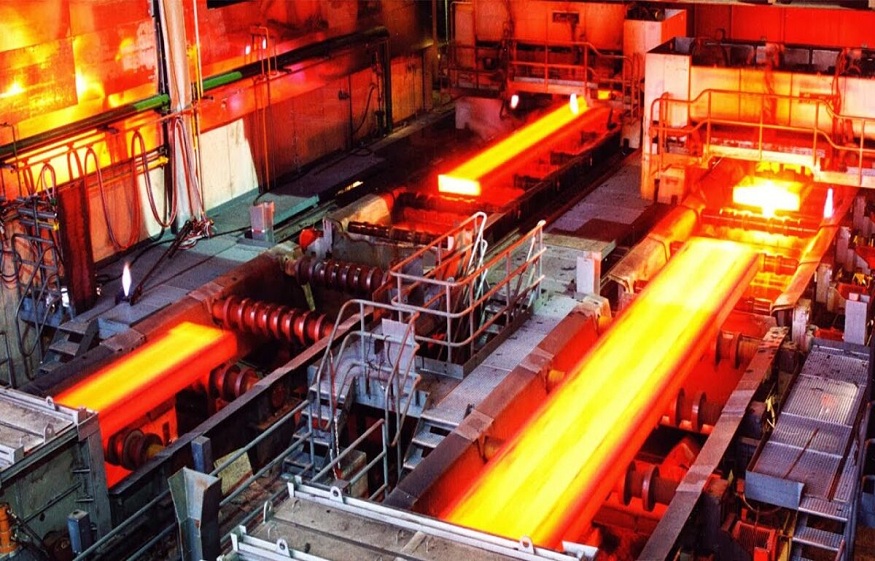
When you see a finished coil on a trailer, it is easy to forget how much controlled work sits behind it. Every pass in the line touches thickness, shape and surface, and these details later affect cutting, welding and forming. For buyers and engineers who rely on steady quality, the equipment that turns a slab into a strip plays a quiet but central role.
Understanding what happens inside a hot strip mill makes it easier to read the steel you approve.
Role of the Mill in Coil Quality
In a hot rolling mill, solid slabs are turned into long, thin strips that can be coiled. As the strip passes each stand, rollers and sensors influence how the steel will behave later during bending, drilling and welding. Even small changes in reduction or temperature can alter strength and ductility, so steady control at this stage helps the steel perform in a consistent way in real structures.
This arrangement helps operators follow the same piece of metal from entry to coiling, tracking speed, temperature and thickness at every step.
How Mill Control Supports Steel for Building
Structures stay safe when beams, columns and plates share load smoothly without sudden movement or cracks. If coil thickness or strength varies too much, the load can be unevenly distributed among parts.
When the hot rolling mill maintains tight control over thickness, shape and temperature, each coil of steel for building construction behaves similarly during bending, cutting and welding. That helps designers rely on their calculations and reduces rework for fabricators and welders.
Temperature and Thickness Control on the Line
In a hot strip mill, one of the key jobs is keeping the thickness close to the target. Sensors before and after each stand measure the strip, while control systems adjust rolling force. The aim is an even thickness along the length and across the width of each coil, so weight, fit and performance stay within the expected range.
Modern control systems in a hot rolling mill also track temperature from the heating section through to the final coiler. If the strip leaves a stand too hot or too cold, grain size and strength level can drift away from the plan.
Surface Condition, Edges and Internal Soundness
Coil quality is not only about thickness. A smooth, even surface, free of heavy scale, deep marks, or rust bands, makes downstream work easier. Edges that are straight and free from serious damage help reduce trimming losses and improve fit-up during fabrication
Connecting Mill Outputs to Buyer Requirements
Hot coils leave the mill with a specific combination of thickness, width, grade and surface condition. Buyers, planners and quality teams then link each batch to drawings, standard codes and client requirements. Clear marking, heat numbers and documentation make it easier to trace a coil from the mill to the finished component.
For many users, the hot strip mill is most valuable when it can supply consistent lots over many orders. When a project runs for months, the ability to call off similar material each time supports smoother fabrication and fewer changes in bending, cutting or welding settings.
Conclusion
In every structure, coil performance begins long before cutting starts in the workshop. The way slabs are handled, heated and rolled decides how the material feels for designers, buyers and fabricators. When teams understand the role of the hot strip mill, they can read certificates and surfaces more clearly and choose coils that support safer, more reliable work over the life of each project.